FREE Delivery Across the UK & Ireland


Rodents such as mice and rats are among the most common household pests in the UK and Ireland. Once they find a way into your home, they can multiply quickly, contaminate food, damage wiring, and create serious hygiene risks. The key to effective rodent control is understanding how they get inside—and then blocking every possible entry point before an infestation grows.
This guide explains exactly how rodents enter homes and the most effective ways to stop them, using practical methods and proven solutions available from Pest Control Shop NI, a trusted supplier of professional pest control products.
How Rodents Get Into Your Home
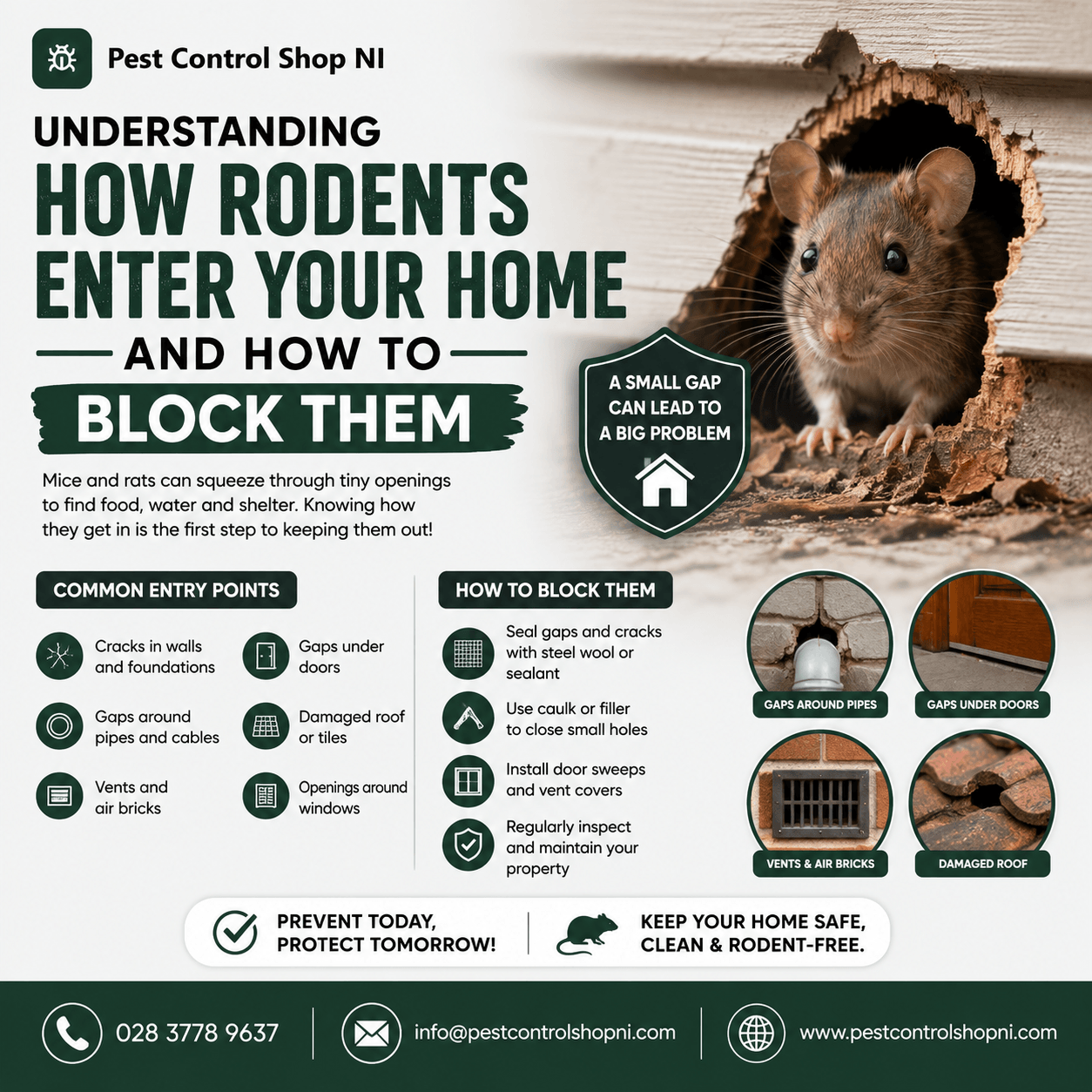
Rodents are incredibly adaptable. A mouse can squeeze through a gap as small as a pencil, while rats only need a slightly larger opening. They are driven by three things: food, warmth, and shelter.
1. Small gaps and cracks in walls
Even tiny openings in brickwork, foundations, or external walls can become entry points. Common weak spots include:
- Cracks near pipes
- Damaged air bricks
- Gaps in mortar joints
Once inside wall cavities, rodents can move freely between floors.
2. Gaps around doors and windows
Poorly sealed doors are one of the most common entry routes.
Rodents often enter through:
- Worn door seals
- Gaps under external doors
- Loose window frames
A gap of just 6–7mm is enough for a mouse.
3. Utility pipe entry points
Pipes entering kitchens, bathrooms, and utility rooms often leave small openings around them.
These include:
- Water pipes
- Gas lines
- Heating system pipes
Rodents use these as hidden highways straight into warm areas of the home.
4. Roof spaces and loft access
Rats are excellent climbers and often enter via:
- Broken roof tiles
- Gaps in soffits and fascia boards
- Overhanging tree branches leading to roofs
Once in the loft, they can nest undisturbed for long periods.
5. Drains and sewer systems
Rats are particularly known for entering homes through drainage systems. They can:
- Swim through pipes
- Climb vertical plumbing
- Enter through broken drain covers
This is one of the most difficult entry points to detect.
Signs You Have Rodents Entering Your Home
Before you can block rodents, you need to confirm their presence. Look for:
- Scratching noises in walls or ceilings
- Droppings in cupboards or along skirting boards
- Chewed food packaging
- Grease marks along walls
- Nests made from shredded paper or fabric
If you notice these signs, rodents are already active inside or very close to entering.
How to Block Rodents Effectively
Once you understand their entry routes, the next step is sealing and controlling access points using professional methods and products.
1. Seal Entry Points Permanently
Blocking access is the most important step in rodent control.
What to use:
- Steel mesh
- Sealant and expanding foam
- Metal plates for larger holes
Rodents can chew through soft materials like plastic or wood, so only durable materials should be used.
2. Install Professional Rodent Control Traps
Once entry points are identified, trapping is essential for active infestations.
Products from Pest Control Shop NI include highly effective solutions such as:
Mouse and Rat Bait Stations
The Mouse & Rat Killer systems shown in professional pest control ranges are designed to safely attract and eliminate rodents while protecting pets and children from exposure.
How they work:
- Bait attracts rodents into secure stations
- Poison or bait blocks are consumed
- Rodents return to nests, reducing colony size
These are especially effective in kitchens, garages, and outdoor sheds.
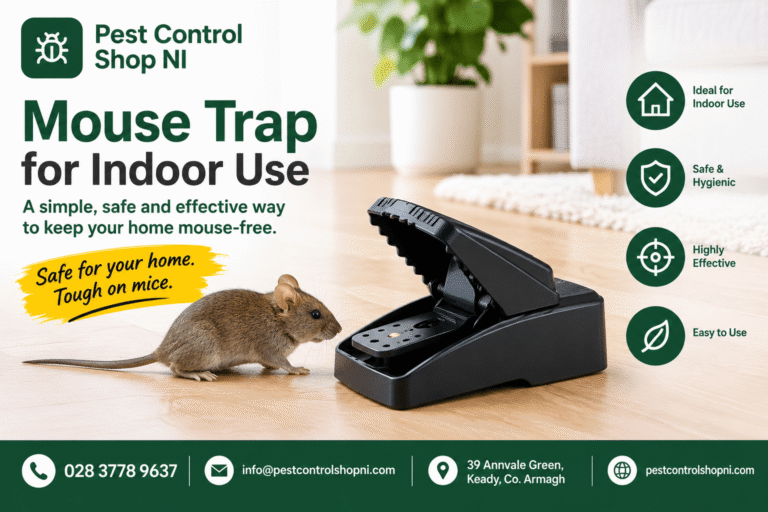
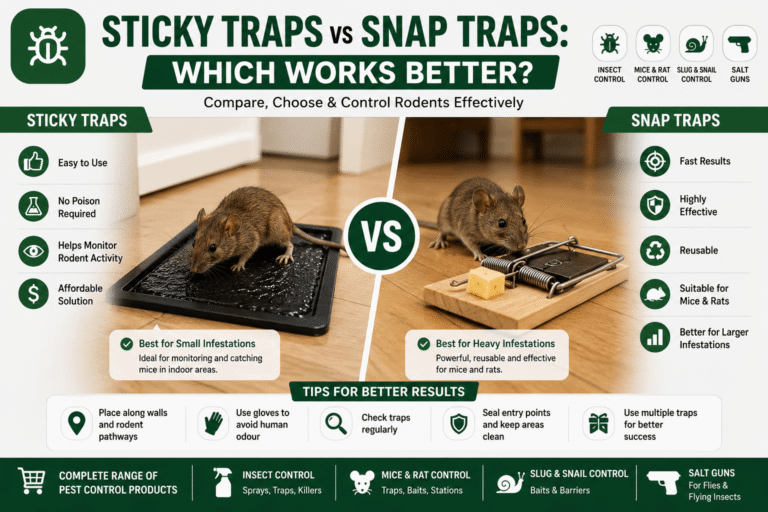
Rodent Glue Traps and Mechanical Traps
Glue boards and snap traps are useful for monitoring and controlling smaller infestations.
From the product range shown by Pest Control Shop NI, glue traps and traditional wooden traps can be placed:
- Along walls
- Behind appliances
- Near suspected entry points
Rodents naturally travel along edges, making these areas ideal trap locations.
3. Strengthen Perimeter Defence Outdoors
Preventing rodents from reaching your home is just as important as stopping them inside.
Outdoor prevention tips:
- Keep bins tightly sealed
- Avoid leaving pet food outside
- Remove clutter such as wood piles
- Trim vegetation near walls
Rodents use gardens as staging areas before entering homes.
4. Use Multi-Pest Protection Systems
Rodent infestations often occur alongside other pest problems such as insects and flies, which attract food sources.
Fly & Insect Control Devices
Devices like the Fly & Insect Killer lamps and Ultra Insect Killer units from Pest Control Shop NI help reduce insect populations that can indirectly attract rodents searching for food sources.
A cleaner environment reduces the overall pest ecosystem pressure.
5. Use Advanced Control Tools for High Activity Areas
For stronger infestations, advanced control systems are necessary.
High-Accuracy Rodent Control Devices
Some pest control kits, including those offered by Pest Control Shop NI, combine bait stations, traps, and protective housings for long-term control.
These systems are especially useful in:
- Lofts
- Basements
- Garages
- Commercial kitchens
They allow continuous monitoring and control without constant maintenance.
6. Maintain a Long-Term Rodent Prevention Plan
Rodent control is not a one-time task. Long-term prevention is essential.
Monthly checks should include:
- Inspecting walls for new gaps
- Checking bait stations
- Looking for droppings or gnaw marks
- Ensuring food storage is sealed
Consistency is what prevents reinfestation.
Why Rodents Keep Coming Back
Even after removal, rodents return if conditions remain favorable. The most common reasons include:
- Unsealed entry points
- Food left accessible
- Outdoor clutter
- Nearby infestations in neighbouring properties
This is why combining sealing + trapping + prevention is critical.
Why Choose Pest Control Shop NI
When dealing with rodents, using professional-grade products makes a significant difference. Pest Control Shop NI provides complete rodent control solutions designed for both prevention and elimination.
Their range includes:
- Mouse and rat bait stations
- Rodent traps (glue and mechanical)
- Multi-pest control kits
- Insect control devices that support a cleaner environment
By offering integrated systems rather than single products, they help homeowners deal with rodent problems more effectively and permanently.
Final Thoughts
Understanding how rodents enter your home is the first step toward complete protection. These pests exploit even the smallest weaknesses in your property, but with proper sealing, monitoring, and control systems, you can stop them effectively.
A combined approach using traps, bait stations, and preventive maintenance—along with trusted solutions from Pest Control Shop NI—ensures your home stays protected year-round.
Rodent control is not just about removing pests; it’s about making your home completely unwelcoming to them.