FREE Delivery Across the UK & Ireland


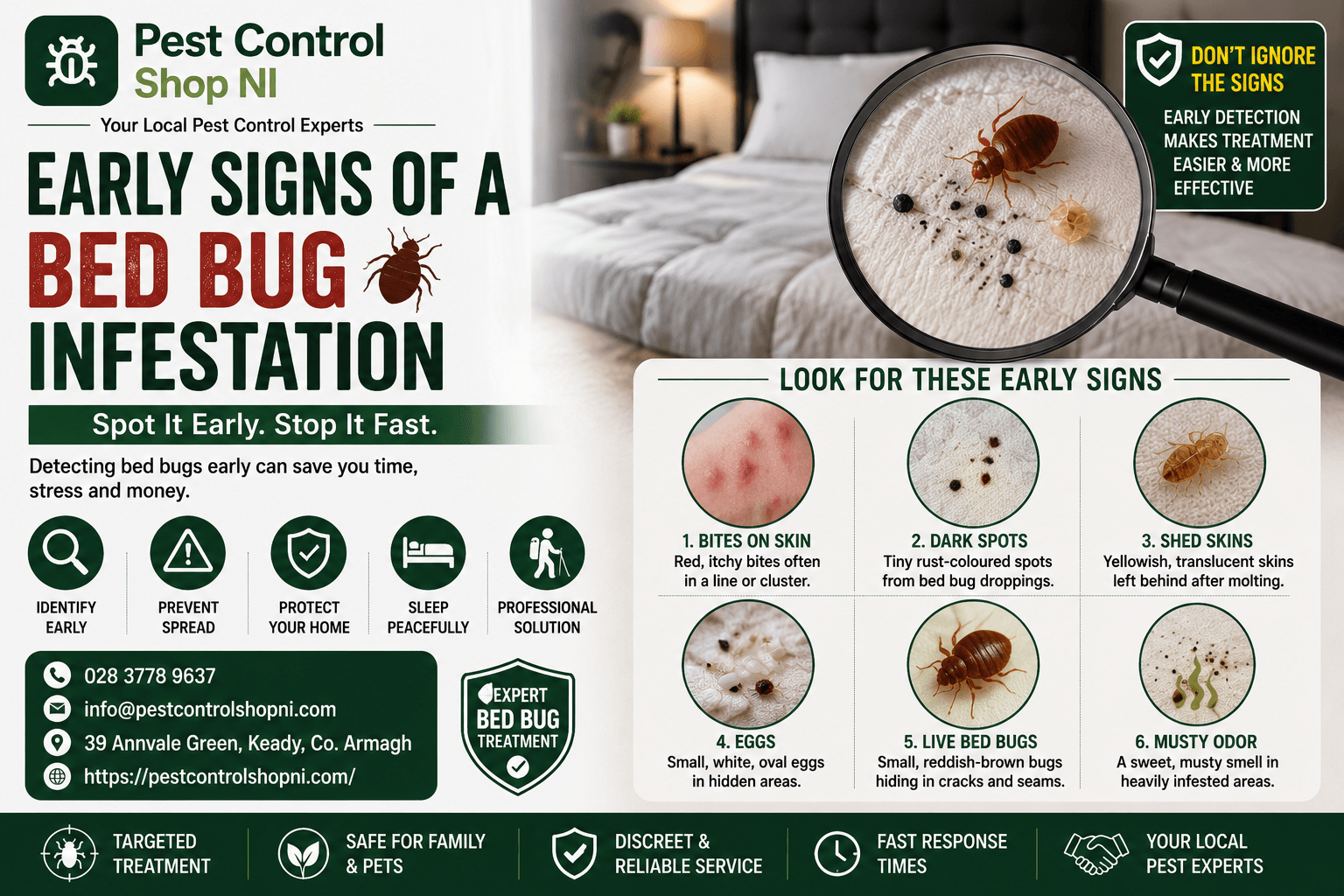
Bed bugs are one of the most difficult pests to deal with once they’ve become established, largely because they’re small, nocturnal, and skilled at hiding in tight spaces. The good news is that catching an infestation early, before it spreads throughout a room or property, makes treatment significantly easier and less disruptive.
Knowing what to look for is the key to early detection. This guide covers the earliest warning signs of a bed bug infestation, where to check, and what steps to take if you suspect a problem.
Why Early Detection Matters
Bed bugs reproduce quickly. A single female can lay several eggs a day, and in the right conditions, a small, unnoticed problem can develop into a widespread infestation within just a few weeks. Bed bugs are also excellent hitchhikers, meaning they can spread from room to room via clothing, luggage, and furniture if left unaddressed. Spotting the signs early not only makes treatment more manageable, but also reduces the risk of the problem spreading to other areas of your home or, in commercial settings, to neighbouring rooms or units.
Physical Signs on Your Body
For many people, the first sign of a bed bug problem is physical, in the form of bites. However, bites alone aren’t a reliable way to confirm bed bugs, as reactions vary significantly from person to person, and some people don’t react to bites at all.
Bite Patterns to Watch For
Bed bug bites often appear as small, red, raised welts, frequently arranged in a line or cluster, sometimes described as a “breakfast, lunch, and dinner” pattern due to the tendency for bed bugs to bite multiple times in a small area during a single feeding session. Bites are most commonly found on areas of skin exposed while sleeping, such as the arms, legs, neck, and face.
When Bites Appear
Because bed bugs are most active at night, bites are typically noticed upon waking, and may take anywhere from a few hours to a few days to become visible, depending on individual sensitivity.
It’s worth noting that bite reactions alone shouldn’t be treated as definitive proof of bed bugs, as other insects and skin conditions can cause similar symptoms. Bites should always be considered alongside other physical evidence in the home.
Physical Signs in Your Home
The most reliable way to confirm a bed bug problem is to look for physical evidence in areas where bed bugs are likely to hide.
Small Blood Stains on Bedding
Tiny reddish-brown stains on sheets or pillowcases can occur when a bed bug is accidentally crushed after feeding. These are often one of the earliest visible signs, particularly on light-coloured bedding.
Dark Spotting or Staining
Small, dark brown or black spots on mattresses, sheets, or nearby furniture are often bed bug excrement. These spots can sometimes bleed slightly into fabric, similar to a marker stain, and are commonly found along mattress seams and joints in furniture.
Eggs and Eggshells
Bed bug eggs are tiny, roughly the size of a pinhead, and pale white or translucent in colour. They’re often found in clusters in hidden crevices, such as mattress seams, and can be difficult to spot without a close inspection or magnifying glass.
Shed Skins
As bed bugs grow, they shed their exoskeletons several times before reaching adulthood. These pale, empty shells can often be found in the same hiding spots as live bugs and are a strong indicator of an active infestation.
Live Bed Bugs
Adult bed bugs are small, flat, oval-shaped, and reddish-brown in colour, roughly the size of an apple seed. While they’re skilled at hiding, a thorough inspection with a torch can sometimes reveal live bugs, particularly if the infestation has progressed beyond the earliest stages.
A Musty, Sweet Odour
In larger infestations, bed bugs can produce a distinctive musty, sweet smell, often described as similar to damp towels or overripe berries. This is usually a sign of a more established infestation rather than an early warning sign, but it’s worth being aware of.
Where to Check for Signs
Bed bugs are drawn to areas close to where people sleep, but they can spread further than many people expect. Key places to check include:
- Mattress seams and piping, particularly around the corners and edges
- Box springs and bed frames, including screw holes and joints
- Headboards, especially where they attach to the wall or bed frame
- Nearby furniture, such as bedside tables, drawers, and upholstered chairs
- Skirting boards and carpet edges close to the bed
- Electrical sockets and wall fixtures near sleeping areas
- Luggage and clothing, particularly after travelling or staying elsewhere
A systematic check of these areas, ideally using a torch and a magnifying glass for close inspection, gives the best chance of catching a problem in its early stages.
Signs That Are Often Mistaken for Bed Bugs
It’s worth noting that not every itchy bite or dark spot is necessarily a bed bug issue. Other insects, such as fleas or mites, and even certain skin conditions, can cause similar symptoms. If you’re uncertain, checking for the physical signs in your home, such as staining, shed skins, or live bugs, is a more reliable indicator than bites alone.
What to Do If You Suspect an Early Infestation
- Inspect thoroughly using a torch, checking mattress seams, furniture joints, and nearby hiding spots.
- Isolate affected bedding and clothing by washing on a high heat setting where possible, as heat is effective at killing bed bugs and their eggs.
- Avoid moving items from an affected room to other parts of the home, as this can spread the problem.
- Vacuum thoroughly, paying close attention to mattress seams, skirting boards, and carpet edges, and dispose of the vacuum bag or contents immediately afterwards.
- Use targeted treatment products, such as bed bug sprays or powders, on identified hiding spots, following the product instructions carefully.
- Monitor the area over the following days and weeks for any further signs, as early-stage infestations can sometimes require more than one round of treatment.
Why Acting Early Makes a Difference
The earlier a bed bug problem is identified, the more manageable it typically is to treat. A small, localised infestation confined to one mattress or piece of furniture is far easier to deal with than one that has spread throughout a bedroom or into neighbouring rooms. Regular checks, particularly after travelling, buying second-hand furniture, or having guests stay overnight, can help you catch a potential problem before it develops further.
Shop Bed Bug Treatment Products with Pest Control Shop NI
At Pest Control Shop NI, we stock a range of bed bug treatment products, including sprays, powders, and complete treatment kits, designed to tackle infestations at every stage. Whether you’ve spotted the early signs or are dealing with a more established problem, our team can help you find the right products for your situation.
Browse our full range online or get in touch with our team for advice on tackling a bed bug problem effectively.