FREE Delivery Across the UK & Ireland


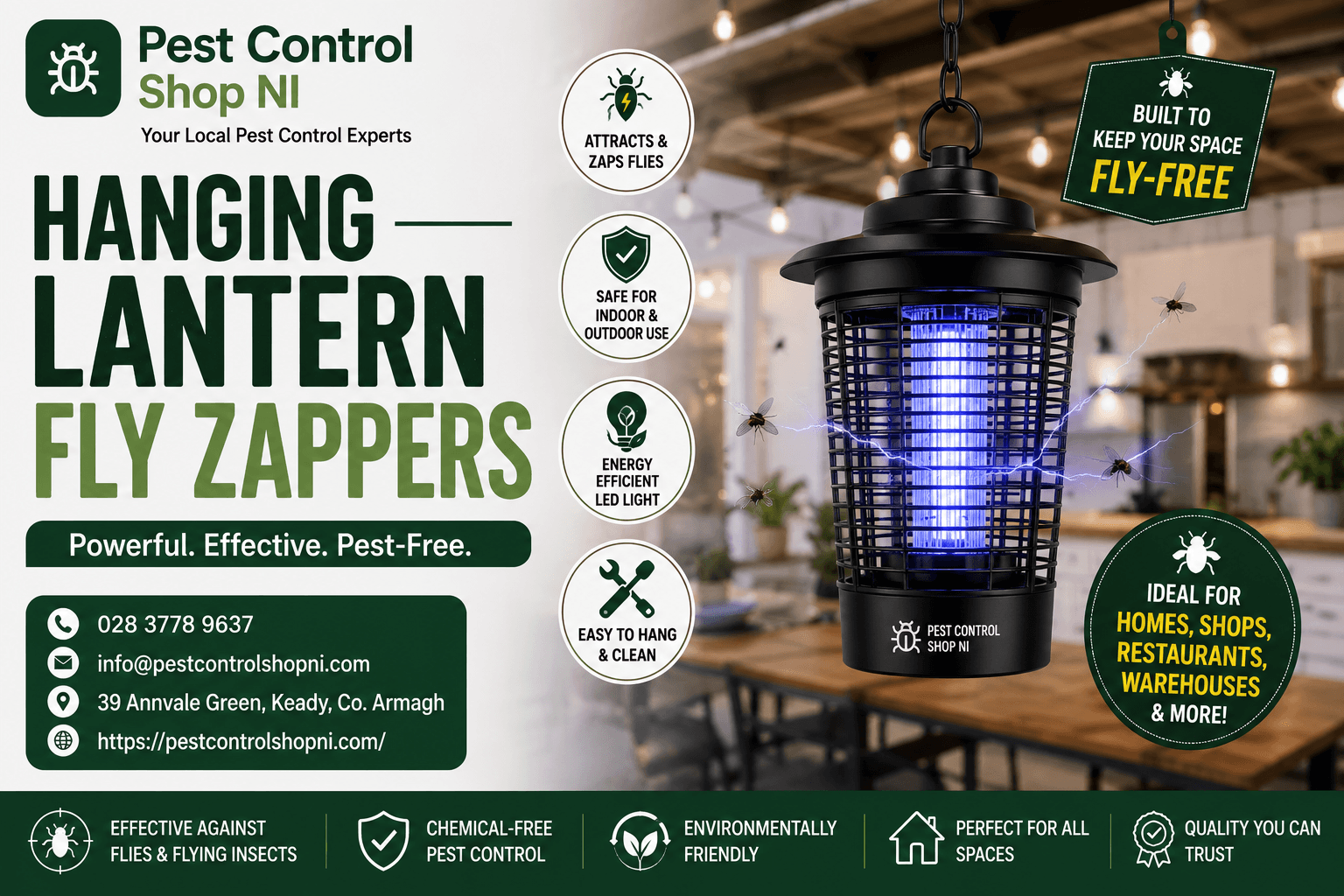
Hanging lantern fly zappers have become a popular choice for homes and businesses looking for a stylish, chemical-free way to manage flying insects. With their decorative, lantern-like design, they’re often marketed as a solution that blends into a room rather than looking like a piece of pest control equipment. But behind the attractive design, a common question remains: do they actually work?
This article looks at how hanging lantern fly zappers function, how effective they genuinely are, and where they fit best within a wider approach to fly control.
How Hanging Lantern Fly Zappers Work
Hanging lantern fly zappers typically combine two features found in traditional electric fly killers, an attractant light and an electrified grid, but package them inside a decorative housing designed to look more like a light fixture than a pest control device.
Most models work in one of two ways:
UV Light Attraction with Electric Grid
Many hanging lantern zappers use a UV light to attract flying insects, drawing them toward the device. Once close enough, insects come into contact with an electrified grid inside the lantern housing, which eliminates them on contact. This is the same basic principle used in traditional “bug zapper” units, simply housed in a more visually appealing design.
UV Light Attraction with Sticky Trap
Some hanging lantern models use a UV light to attract insects toward a sticky glue board or trap inside the unit, rather than an electrified grid. This version tends to be quieter, as there’s no electrical zapping sound, and can be a preferable option for indoor spaces such as living rooms, bedrooms, or offices.
Do They Actually Work? What the Evidence Shows
The short answer is yes, hanging lantern fly zappers can be effective, but their performance depends heavily on how and where they’re used. Like any UV-light-based fly control device, their effectiveness relies on a few key principles:
Attraction Range Matters
UV light attractants have a limited effective range, generally a few metres, depending on the device’s power and ambient lighting conditions. A lantern zapper placed in a large, open space is likely to catch far fewer insects than one placed in a smaller, more contained room where its attraction range covers more of the area.
Ambient Light Competition
UV light attractants work best in dimmer conditions. In a brightly lit room, particularly one with natural daylight, the effectiveness of the UV attractant can be significantly reduced, as it has to compete with other light sources. This is why these devices tend to perform best in the evening or in spaces with lower ambient lighting.
Placement Is Key
Positioning has a major impact on results. Hanging a lantern fly zapper near a common insect entry point, such as a doorway, window, or outdoor seating area, tends to yield better results than placing it in a corner or area insects are unlikely to pass through.
Insect Type
Like most UV-based traps, hanging lantern zappers are generally most effective against common flying insects such as houseflies, fruit flies, and mosquitoes. They tend to be less effective against insects that aren’t strongly attracted to UV light, such as certain species of moth or larger flying pests.
Advantages of Hanging Lantern Fly Zappers
Chemical-Free Operation
Because they rely on light attraction and either an electric grid or sticky trap, hanging lantern zappers don’t release any chemicals into the surrounding air, making them a suitable option for kitchens, dining areas, and spaces where food is prepared or served.
Discreet, Decorative Design
Unlike traditional boxy fly zappers, lantern-style units are designed to look like a decorative light fixture. This makes them a popular choice for spaces where appearance matters, such as dining rooms, cafés, conservatories, and outdoor seating areas.
Continuous, Passive Operation
Once installed, a hanging lantern zapper works continuously without requiring ongoing effort, unlike sprays or manual swatting, which need to be repeated regularly.
Suitable for Indoor and Covered Outdoor Use
Many hanging lantern models are designed for both indoor use and covered outdoor spaces, such as patios or conservatories, making them a versatile option for homes and hospitality businesses alike.
Limitations to Be Aware Of
Not Effective in Direct Sunlight or Very Bright Rooms
As mentioned, strong ambient light reduces the pulling power of the UV attractant, so these devices are generally less effective in bright daylight conditions.
Limited Range for Larger Spaces
A single lantern zapper is unlikely to be sufficient for large open-plan spaces, warehouses, or expansive outdoor areas. In these cases, multiple units, or a combination with other pest control methods, may be needed.
Requires Regular Maintenance
Electrified grid models need periodic cleaning to remove insect debris, while sticky trap versions require the glue board to be replaced once it becomes full. Neglecting this maintenance can significantly reduce a device’s ongoing effectiveness.
Not a Standalone Solution for Larger Infestations
While effective for ongoing, everyday fly control, a hanging lantern zapper is generally best used as part of a broader pest management approach, rather than a sole solution for a significant fly infestation, which may require additional treatment methods.
Best Places to Use a Hanging Lantern Fly Zapper
- Kitchens and dining areas, where a chemical-free option is preferable
- Cafés and restaurants, where discreet, decorative design matters
- Conservatories and covered patios, particularly during warmer months
- Offices and reception areas, where appearance and quiet operation are a priority
- Bedrooms and living spaces, particularly sticky-trap versions, due to quieter operation
Getting the Best Results
To get the most out of a hanging lantern fly zapper:
- Position it near likely entry points, such as doors, windows, or outdoor-facing areas.
- Use it in dimmer lighting conditions where possible, such as evenings or shaded areas.
- Clean or replace the trap component regularly, whether that’s wiping down an electrified grid or replacing a glue board.
- Combine it with good hygiene practices, such as managing food waste and keeping surfaces clean, to reduce what’s attracting flies in the first place.
- Consider multiple units for larger rooms or spaces with higher fly activity.
Shop Hanging Lantern Fly Zappers with Pest Control Shop NI
At Pest Control Shop NI, we supply a range of hanging lantern fly zappers and other electric fly control solutions suited to homes and businesses across Belfast, Newtownabbey, Lisburn, and the wider Northern Ireland area. Whether you’re looking for a discreet solution for your kitchen or a practical option for a café or office, our team can help you choose the right product for your space.
Browse our full range online or get in touch for advice on the best fly control solution for your needs.