FREE Delivery Across the UK & Ireland


Finding signs of a mouse indoors can be frustrating. Droppings, gnaw marks, scratching noises and damaged food packaging can all indicate that mice are active inside your property. Choosing the right mouse trap is an important part of dealing with the problem effectively.
But what is the best type of mouse trap for indoor use?
For most indoor situations, snap traps are one of the most practical and effective options when they are correctly positioned and used safely. However, other options, such as live-catch traps and electronic traps, may be suitable depending on the property, the level of activity and personal preferences.
This guide explains the main types of mouse traps, how they work, where to place them and what to consider before buying.
What Makes a Mouse Trap Effective?
A good indoor mouse trap should be easy to use, suitable for the location and capable of catching mice without creating unnecessary risks for people or pets.
Several factors can affect how well a trap works:
- The type of trap
- Where the trap is placed
- The bait used
- The number of traps installed
- Mouse activity and movement patterns
- Whether food and other attractants are removed
Even the best trap may not work effectively if it is placed in an area where mice rarely travel.
For this reason, trap placement is often just as important as the type of trap you choose.
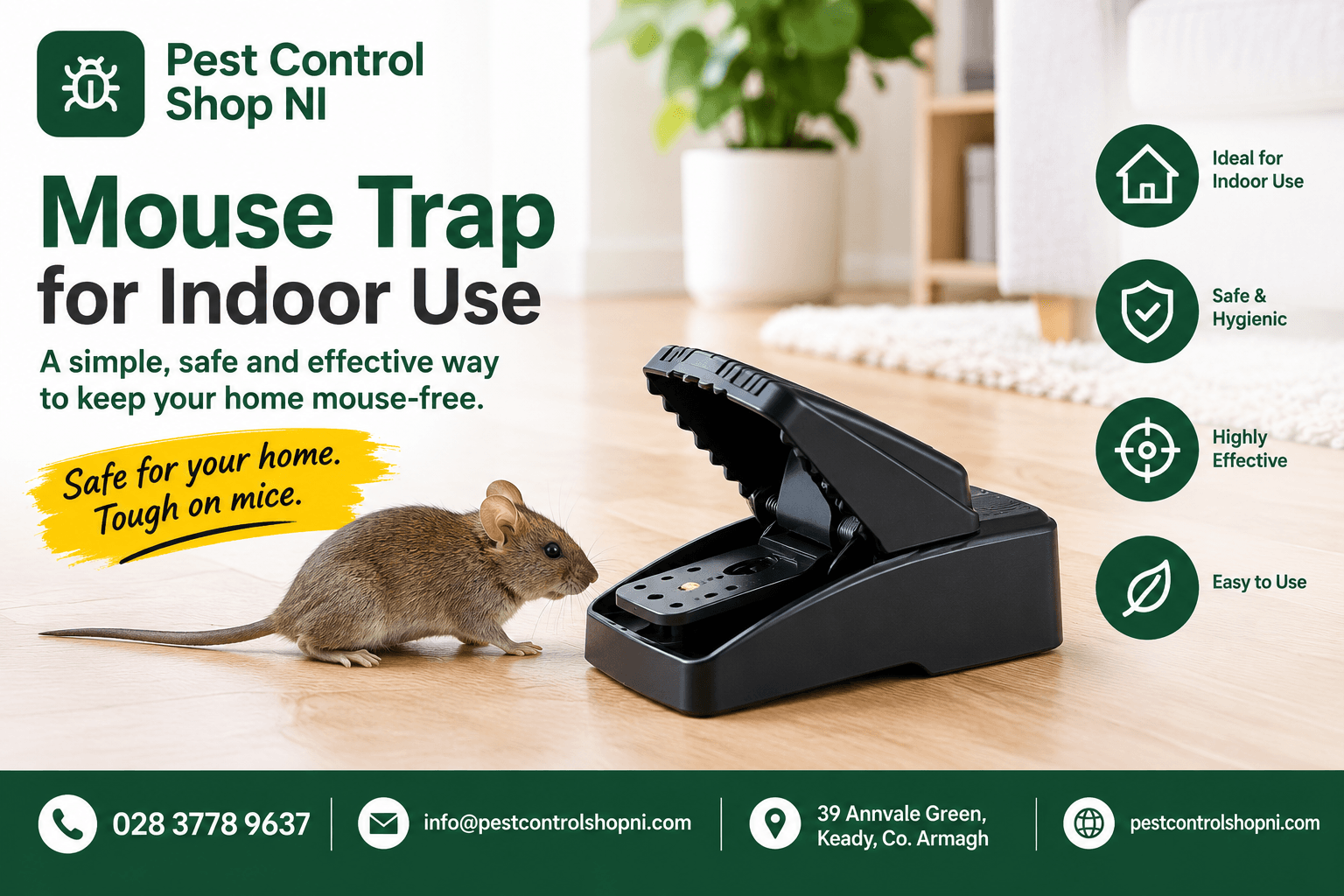
Snap Mouse Traps
Traditional snap traps remain a popular choice for indoor mouse control. They use a spring-loaded mechanism that activates when a mouse interacts with the bait or trigger.
Why choose a snap trap?
Snap traps are generally:
- Simple to set
- Reusable, depending on the design
- Relatively inexpensive
- Suitable for many indoor environments
- Available in different sizes and designs
They can be particularly useful along walls, behind appliances and in other areas where mice commonly travel.
When using snap traps, always follow the manufacturer’s instructions and position them somewhere inaccessible to children and pets.
Live-Catch Mouse Traps
Live-catch traps are designed to capture mice without killing them. A mouse enters the trap to reach bait, triggering a mechanism that closes the entrance.
These traps may appeal to people who prefer a non-lethal approach. However, they require regular checking because a captured animal should not be left inside the trap for extended periods.
There may also be local considerations regarding how captured mice should be handled and released. Before using a live-catch trap, check applicable animal-welfare and pest-control guidance.
For some properties, live-catch traps can be a useful option, but they may not always be the most practical solution for an established mouse problem.
Electronic Mouse Traps
Electronic mouse traps use an electrical mechanism to kill a mouse after it enters the trap.
One advantage is that many electronic designs contain the catch within an enclosed housing. This can make them easier to handle and potentially less exposed than an open traditional trap.
Electronic traps can be useful where appearance, ease of handling or enclosed operation is important. They can also be convenient for indoor areas such as kitchens, utility rooms and garages.
However, they usually cost more than basic snap traps, so you should consider whether their additional features are worthwhile for your particular situation.
Glue Traps
Glue traps use a strong adhesive surface to hold a mouse when it comes into contact with it.
Although they have historically been used for rodent control, glue traps raise significant animal-welfare concerns and may be restricted or inappropriate in some circumstances. Their use should therefore be considered carefully in light of current local regulations and welfare guidance.
For many indoor situations, alternative trap designs are preferable.
Which Mouse Trap Is Best for Indoor Use?
There is no single trap that is perfect for every property.
For many homeowners, a properly used snap trap offers a good combination of simplicity, effectiveness and affordability. Electronic traps can be an alternative for people who prefer an enclosed design, while live-catch traps may suit those looking for a non-lethal approach.
Here is a simple comparison:
| Mouse Trap Type | Main Advantage | Considerations |
| Snap trap | Simple and affordable | Must be positioned safely |
| Live-catch trap | Non-lethal design | Requires frequent checking |
| Electronic trap | Enclosed and convenient | Usually more expensive |
| Glue trap | Simple design | Animal-welfare concerns and possible restrictions |
The right choice ultimately depends on the property, mouse activity and the conditions in which the trap will be used.
Where Should You Put Mouse Traps?
Correct placement can make a significant difference.
Mice generally prefer to move along protected routes rather than crossing open areas. This means traps are often more useful near walls, behind furniture, around cupboards and close to other areas where signs of mouse activity have been noticed.
Potential locations include:
- Along walls and skirting boards
- Behind refrigerators and other appliances
- Near kitchen cupboards
- Around utility areas
- Close to suspected entry points
- In garages, sheds or storage areas where appropriate
Avoid placing traps in the middle of a large open room unless there is a specific reason to do so.
If you have seen mouse droppings or gnawing in a particular area, look for nearby routes and protected spaces rather than placing a trap randomly.
What Bait Should You Use?
Mice are attracted to food with strong smells and relatively high energy content. Small amounts of suitable bait can therefore be used with some trap designs.
Common bait choices include:
- Peanut butter
- Small amounts of chocolate
- Seeds or nuts
- Other strongly scented food
Only use the amount recommended or appropriate for the trap design. Too much bait can sometimes allow a mouse to take food without properly triggering the mechanism.
The most important point is that bait alone will not solve a mouse problem. If easily accessible food is available elsewhere, mice may simply ignore the trap.
How Many Mouse Traps Do You Need?
Using a single trap may not be enough if there are several signs of mouse activity.
Instead of concentrating all traps in one location, consider placing several traps along areas where mice are likely to travel. This can increase the chances of encountering an active mouse.
The number required depends on the size of the property and the level of activity.
If you continue finding fresh droppings or hearing scratching after traps have been installed, it may indicate that there are additional mice or that an entry point has not been addressed.
Preventing Mice From Returning
Trapping is only one part of indoor mouse control. Preventing access to food and shelter can make your property less attractive to mice.
Consider these preventative measures:
Seal potential entry points
Mice can enter through surprisingly small gaps. Inspect areas around pipes, doors, vents, walls and other potential access points. Seal suitable gaps using appropriate materials.
Store food securely
Keep food in sealed containers and avoid leaving food exposed overnight.
Clean food spills
Crumbs and food residue can provide an easy food source. Regular cleaning is especially important around kitchen surfaces and floors.
Manage rubbish
Keep household waste in suitable closed containers and dispose of rubbish regularly.
Reduce clutter
Storage boxes, unused materials and clutter can provide mice with places to hide and nest.
When Should You Consider Professional Help?
A few signs of mouse activity do not necessarily mean that a serious infestation has developed. However, persistent or increasing activity should not be ignored.
Professional advice may be appropriate if:
- You regularly find fresh droppings
- You hear mice moving at night
- Food packaging is repeatedly damaged
- You find nesting material
- You continue catching mice over an extended period
- You cannot identify how mice are entering the property
- Mouse activity is occurring in areas where food is prepared or stored
Pest Control Shop NI provides pest-control equipment for customers looking for practical solutions to common pest problems. Choosing suitable equipment and using it correctly can help make indoor rodent control more systematic.
Final Thoughts
So, what is the best type of mouse trap for indoor use?
For many households, a well-designed snap trap is a straightforward and cost-effective choice, while electronic and live-catch traps provide alternatives depending on your preferences and circumstances.
However, choosing a trap is only part of the solution. Correct placement, suitable bait, sanitation and preventing access to the property are all important when dealing with mice.
If you are looking for mouse traps for sale or other pest-control equipment, choosing products suited to your specific situation can make indoor pest management more practical and effective.
Frequently Asked Questions
What is the most effective mouse trap for indoor use?
For many indoor situations, a correctly positioned snap trap is an effective and practical option. Electronic traps can also be useful where an enclosed design is preferred.
Where is the best place to put a mouse trap?
Place traps close to walls and along suspected mouse travel routes. Areas near cupboards, appliances and other sheltered locations can be worth checking for signs of activity.
What bait attracts mice to traps?
Small quantities of strongly scented foods such as peanut butter, nuts or seeds can be suitable for some traps. Always follow the trap manufacturer’s instructions.
Should I use one or several mouse traps?
If there are multiple signs of activity, using several appropriately positioned traps can be more effective than relying on one trap in a single location.
Can I prevent mice without traps?
Prevention is important. Sealing entry points, storing food securely, cleaning regularly and reducing potential nesting areas can all help reduce the likelihood of mice entering and remaining indoors.